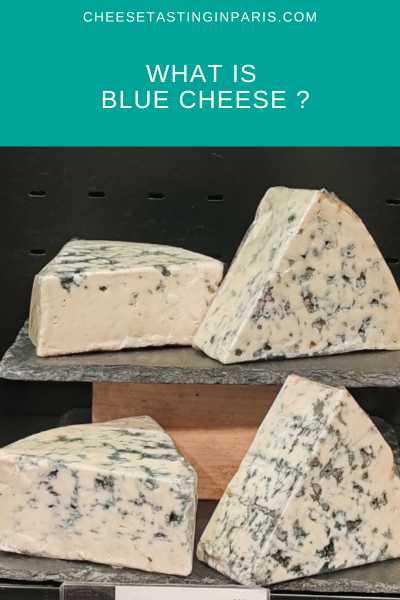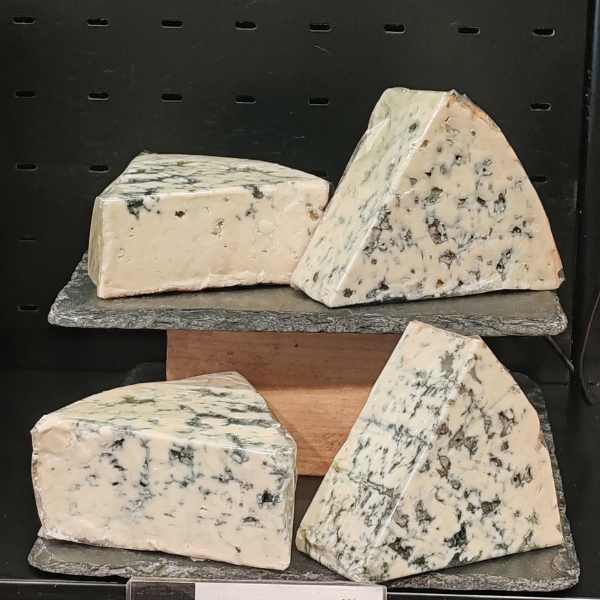
Blue cheese is one of the most distinctive and beloved cheeses in the world. With its bold flavor, creamy texture, and iconic blue-green veins, it has earned a permanent place in gourmet kitchens and on cheese boards everywhere. But what exactly is blue cheese, how is it made, and why does it taste the way it does?
What is blue cheese ?
Blue cheese is a category of cheese made from cow’s, sheep’s or goat’s milk that has been treated with cultures of Penicillium, a type of edible mold. This mold grows throughout the interior of the cheese, creating the characteristic blue, blue-green or blue-gray veins that give blue cheese its name and its unmistakable sharp, tangy and slightly salty flavor.
The history of blue cheese stretches back thousands of years. According to popular legend, Roquefort, one of the world’s most famous blue cheeses, was discovered accidentally when a young shepherd left his lunch of bread and sheep’s milk cheese in a cave and returned weeks later to find it transformed by mold. Whether or not the story is true, natural cave environments have long been essential to the aging of traditional blue cheeses.
What is the difference between blue cheese and bleu cheese? There is no difference. “Bleu” is simply the French word for “blue.” Both terms refer to the same type of cheese. “Bleu cheese” is often used in culinary contexts or on restaurant menus to give the dish a more refined feel.
How is blue cheese made ?
The production of blue cheese follows a careful process that distinguishes it from all other cheese varieties:
1. Milk selection and curdling : Cheesemakers start with whole milk : cow, sheep or goat depending on the variety. The milk is pasteurized (or left raw for some artisan versions), then combined with starter cultures and rennet to form curds.
2. Adding penicillium mold : The key step: spores of Penicillium roqueforti or Penicillium glaucum are introduced into the curds. These edible molds are entirely safe to eat and are responsible for the characteristic flavor and appearance of blue cheese.
3. Shaping and salting : The curds are cut, drained and pressed into molds. The cheese is then heavily salted both on the surface and throughout to preserve it and contribute to its bold taste.
4. Piercing : After a few weeks, cheesemakers use long metal needles to pierce the cheese from top to bottom. These channels allow oxygen to flow inside the cheese, which is essential for mold growth. Without oxygen, the penicillium mold cannot develop properly.
5. Aging : Blue cheese is aged anywhere from a few weeks to several months, typically in cool, humid cellars or caves. During this time, the mold spreads through the air pockets created by the needles, developing the signature blue veins and complex flavor.
How does blue cheese taste ?
lue cheese has a flavor profile unlike any other cheese. It is typically described as:
- Sharp and tangy with a pronounced acidic bite
- Salty due to heavy salting during production
- Earthy and pungent from the mold cultures
- Creamy and rich especially in younger or milder varieties
- Complex with hints of nuttiness, spice, or sweetness depending on the type
The intensity of the flavor varies widely. Milder blue cheeses like Gorgonzola Dolce are creamy and subtle, while aged Roquefort or Stilton can be deeply pungent and crumbly.
Some blue cheeses are mild and creamy, while others are intense, pungent and crumbly. Discover strong cheeses during one of my cheese tastings in Paris !
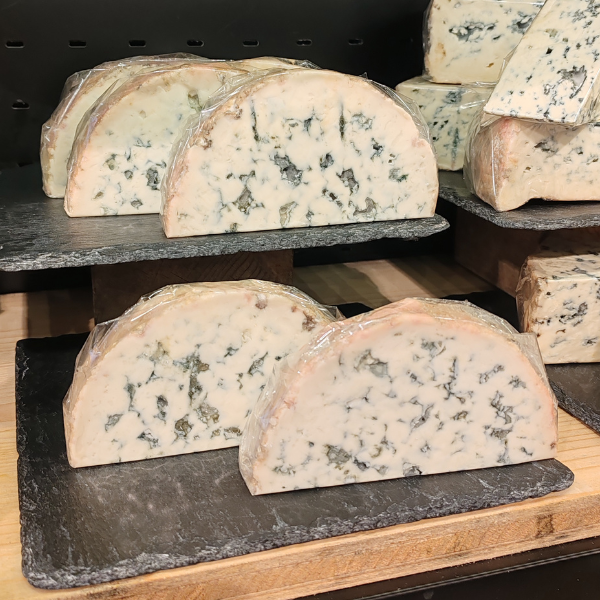
Famous French blue cheeses
French blue cheeses are world-renowned for their quality, strong character and traditionalproduction methods. Most are protected by AOP (Appellation d’Origine Protégée) status, guaranteeing origin and authenticity. Here are the most famous types of French blue cheese :
Roquefort : The most famous French blue cheese
Roquefort is a traditional blue cheese made from sheep’s milk and aged in natural limestone caves in southern France. It has a creamy texture, intense aroma, and bold, salty flavor. Roquefort is often considered the king of blue cheeses.
Milk: Sheep
Flavor: Strong, salty, complex
Bleu d’Auvergne : creamy and balanced
Bleu d’Auvergne is made from cow’s milk and offers a smoother, creamier texture than Roquefort. Its flavor is well-balanced, making it a popular choice for sauces and cheese boards.
Milk: Cow
Flavor: Pronounced but creamy
Fourme d’Ambert : mild French blue cheese
Fourme d’Ambert is one of the mildest French blue cheeses and has an interesting shape. With light blue veining and a soft texture, it is perfect for those new to blue cheese.
Milk: Cow
Flavor: Gentle, slightly nutty
Bleu des Causses : rustic and intense
Bleu des Causses is made from cow’s milk and aged in natural caves, similar to Roquefort. It has a powerful, earthy flavor and a firm yet creamy texture. You won’t fin dit easily.
Milk: Cow
Flavor: Strong, earthy, spicy
Bleu de Gex : mild and delicate
Bleu de Gex comes from the Jura Mountains near the Swiss border. It is lightly veined, less salty, and very creamy, making it one of the most approachable French blue cheeses.
Milk: Cow
Flavor: Mild, slightly sweet
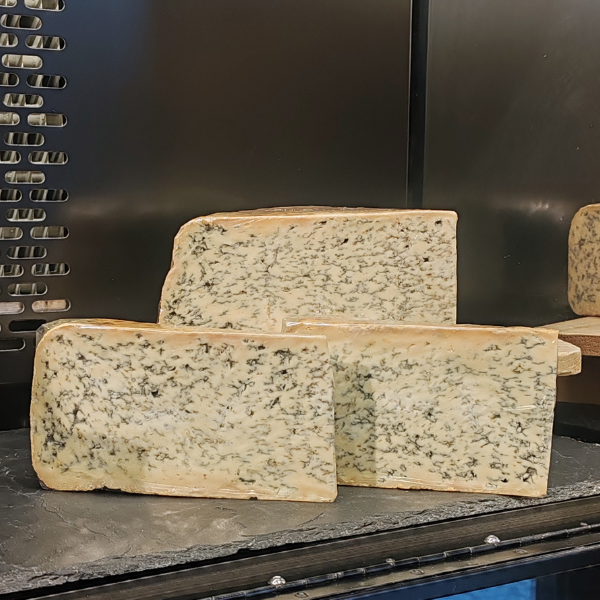
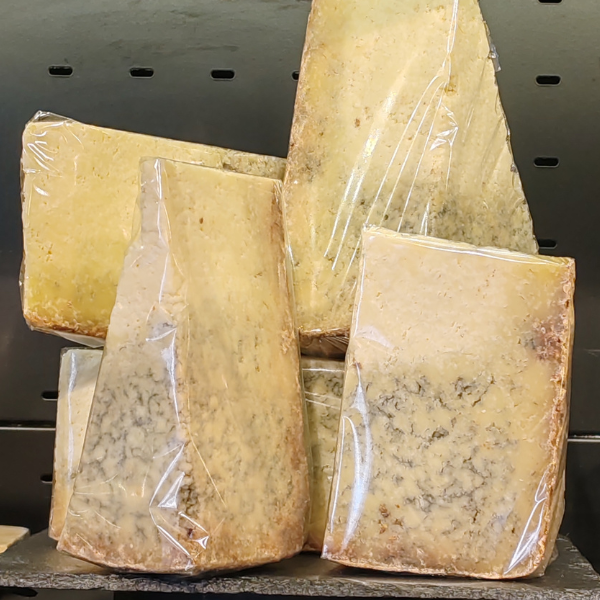
Bleu de Termignon
Bleu de Termignon is a rare, farmhouse blue cheese produced in the French Alps. It’s like the Rolls Royce of blue cheeses and you won’t find it in all the cheese mongers.
It is still made today between June and September, on the same alpine pastures of Termignon, at an altitude of 2000m.
The production technique for the wheels (weighing 7 to 10 kg) is age-old: two curds are mixed (the current day’s curd and the curd from two days prior, known as sour curd). This mixture is kept submerged in a vat. Stirred and then salted, it is pressed by hand into pine molds lined with linen. This linen is changed daily. After draining, the cheeses remain for another 15 days in a temperature-controlled room called “the Blue Cheese Room” before being moved to the cellar.
It is in the cellar that this white, crumbly paste naturally develops veins of dark blue mold. These molds are spontaneous and natural, unlike some other blue cheeses that are inoculated with Penicillium. The proliferation is accelerated by piercing the cheese. Beneath this brown and ochre rind, with its stone-like appearance and hardness, an inimitable, unique, natural, and rustic flavor develops. The cheese is aged for 4 to 5 months, during which time the wheels are regularly turned. Bleu de Termignon is only available for sale at the end of summer.
It has a dense texture and a rustic, complex flavor with earthy and slightly spicy notes.
Only 4 producers remain, still making these few precious hundred wheels. Each piece is numbered by the producer at the time of molding.
Milk: Cow
Flavor: Rustic, earthy, moderately strong
Why French blue cheeses are so popular ?
French blue cheeses stand out thanks to:
- Traditional cheesemaking techniques
- AOP quality protection
- Regional milk and aging environments
- A wide range of flavor intensities
From mild to powerful, French blue cheeses offer something for every taste and are staples of cheese boards, salads and gourmet recipes.e natural salinity of seafood, while its acidity cuts through richness without overpowering delicate flavors.
Popular examples of blue cheese around the world :
Gorgonzola : An Italian blue cheese that can be creamy and mild (Dolce) or firm and strong (Piccante) I Personally find the piccante version too salty.
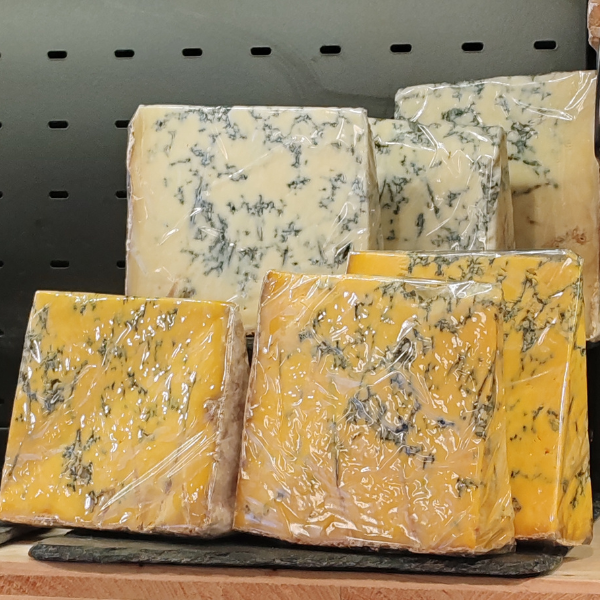
Stilton : A classic English blue cheese with a rich, crumbly texture and balanced flavor
Danish Blue (Danablu) : A strong, creamy blue cheese with a salty bite
Cabrales : A powerful Spanish blue cheese traditionally aged in mountain cavesbal notes naturally complement green vegetables which can be challenging to pair with other wines.
How to use blue cheese in cooking ?
Blue cheese is incredibly versatile in the kitchen. Here are the most popular ways to use it:
On a cheese board : Pair it with honey, walnuts, fresh or dried fruits (pears, grapes, figs), and crackers for an elegant appetizer.
In salads : Crumbled blue cheese is a classic topping for wedge salads, arugula salads and grain bowls. It pairs beautifully with balsamic vinegar and candied nuts.
In sauces and dressings : Blue cheese sauce is a beloved accompaniment to buffalo wings and steaks. Blue cheese dressing is a staple on salads and crudités.
On pizza and flatbreads : Blue cheese adds depth when paired with caramelized onions, pears, figs or prosciutto.
In pasta and risotto : Melted into a cream sauce, blue cheese creates a rich, flavorful dish in minutes.
With wine and spirits : Blue cheese pairs exceptionally well with sweet wines (Sauternes, late-harvest Riesling) and fortified wines (Port, Sherry).
Why does blue cheese have blue veins ?
The blue veins form when mold cultures are added during the cheesemaking process. The cheese is then pierced with needles, allowing oxygen to enter. This oxygen activates the mold, which spreads through natural cracks inside the cheese, creating the iconic and beautiful veining pattern.
Why is blue cheese blue ?
Blue cheese gets its color from Penicillium mold, which creates blue or green veins during the aging process.
Does blue cheese taste moldy ?
While it has a strong aroma, the taste is tangy, creamy, and slightly salty, not unpleasantly moldy.
Is blue cheese safe to eat ?
Yes! The mold used in blue cheese is safe and edible, unlike harmful molds found on spoiled foods.
I don’t like blue cheese
You don’t have to but give it a try again it a few years as our palate changes as we get older.
Blue cheese is a remarkable product of time, tradition, and microbiology. Whether you prefer the crumbly intensity of Roquefort, the creamy mildness of Gorgonzola Dolce, or the classic richness of Stilton, there is a blue cheese for every palate. Its bold flavor makes it a transformative ingredient in the kitchen and an unforgettable centerpiece on any cheese board.
Now that you know what blue cheese is, how it is made, and how to use it, the only thing left to do is taste it.
You want to pint it?